Buna Science.
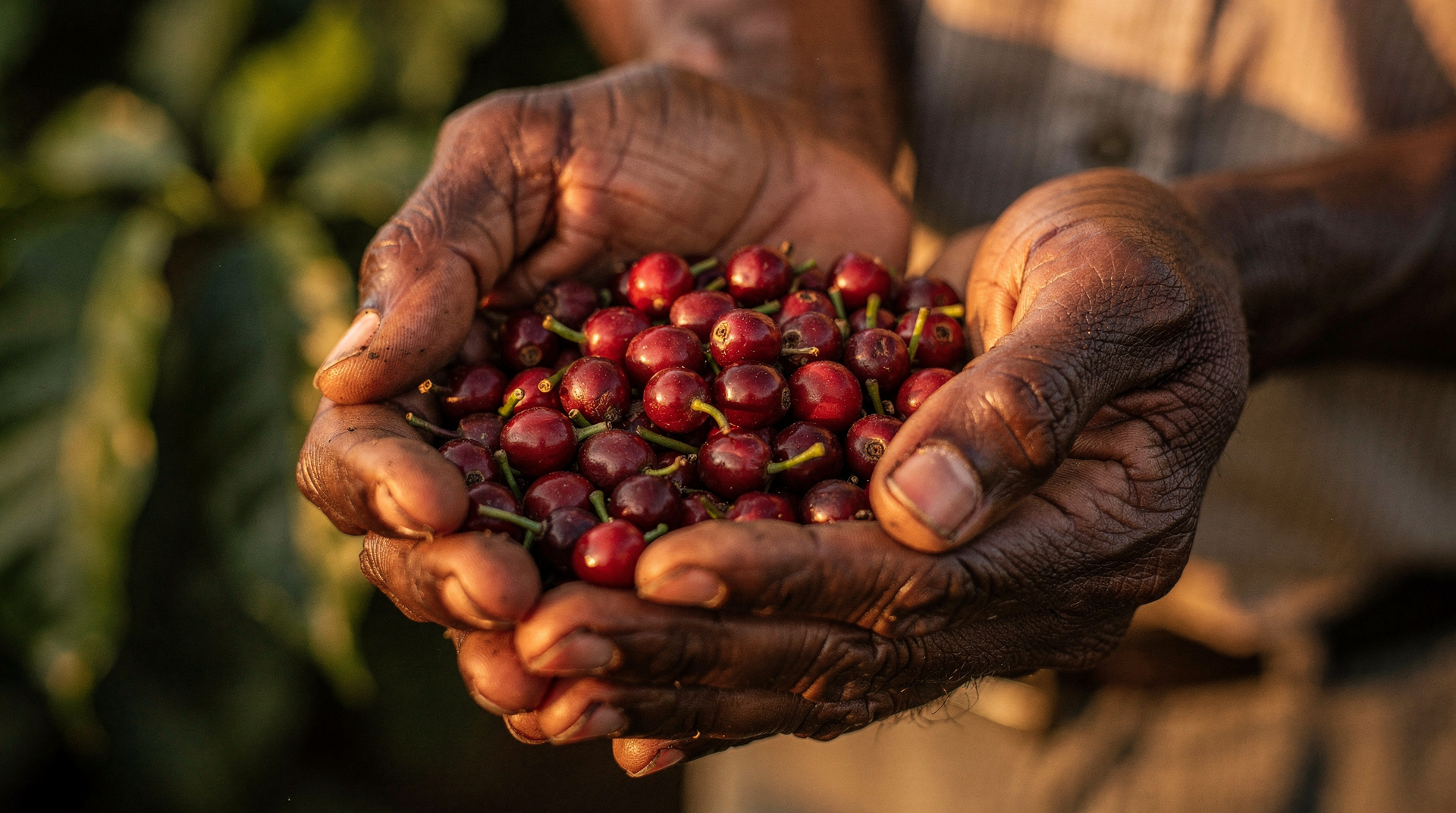
ቡና is the Amharic word for coffee. It comes from the Ethiopian highlands where Coffea arabica originated, where the plant still grows wild in the forest, where coffee is ceremony, community, and daily ritual.
We took the oldest word for coffee and paired it with the most precise way to understand it. NIR spectroscopy. Closed-loop roasting. Flavor chemistry measured in real time. Every bean has a story written in its molecular structure. We read it.
Founded in Sarasota, Florida. Sourcing from every coffee-growing region on Earth. 36 origins and counting.
Coffee for all cultures. Science for every cup.
Coffee is spoken in every language. It crosses every border, every culture, every generation. The word changes, the ritual doesn't. We honor every tradition by understanding the science beneath it.
Two words. Two lineages.
Buna
The older root. From Ethiopia and Eritrea, where coffee was born. Buna predates qahwa, which predates kahve, which became coffee, café, kopi, kohi, and every other word for this plant.
When you say buna, you're speaking the first word humans ever used for coffee.
Science
Not a marketing word. A method. NIR spectroscopy measures the chemistry of the bean while it roasts. Closed-loop control adjusts in real time. Every batch is data. Every cup is reproducible.
We don't guess. We measure. The science is what makes the coffee better.
How coffee got its name.
Two lineages, one plant:
ቡና buna (Ethiopian)
→ bun (Somali, Oromo)
The older root. Still used in Ethiopia, Eritrea, Somalia.
قهوة qahwa (Arabic, originally meant "wine")
→ kahve (Turkish)
→ caffè (Italian) → café, coffee, Kaffee, koffie, kopi
→ кофе (Russian)
→ コーヒー (Japanese, from Dutch)
→ 咖啡 (Chinese, phonetic)
→ 커피 (Korean, from English)
→ cà phê (Vietnamese, from French)
→ kahawa (Swahili, from Arabic)
→ kafe (Greek, Albanian, Khmer)
Spread westward through Ottoman Turkey and European trade routes.